The short answer
A DOT physical is the medical exam that commercial motor vehicle drivers need under federal rules. It checks whether you are physically qualified to drive safely. If you pass, the medical examiner issues a medical examiner’s certificate, often called a DOT medical card, which can be valid for up to 24 months.
A DOT physical does not include a drug test. It includes a urine test, but that test checks for signs of medical problems such as kidney disease or diabetes, not drugs. The DOT drug test is a separate test, usually done as part of pre-employment screening.
Who needs a DOT physical?
Drivers who operate commercial motor vehicles in interstate commerce generally need one, including drivers of vehicles over 10,000 pounds, vehicles designed to carry passengers above certain limits and vehicles carrying hazardous materials that require placards. States often apply similar rules to drivers who stay within one state. The physical qualification standards are in 49 CFR 391.41.
The exam must be done by a medical examiner listed on the FMCSA National Registry of Certified Medical Examiners. A regular doctor’s visit doesn’t count unless that doctor is on the registry.
What does a DOT physical consist of?
| Part of the exam | What it checks |
|---|---|
| Health history form | Past and current conditions, surgeries and medications, which you complete and sign |
| Vision | At least 20/40 in each eye and both eyes together, with or without glasses or contacts; adequate side vision; ability to tell traffic-signal colors apart |
| Hearing | Hearing a forced whisper at 5 feet or more, or passing a hearing test, with or without hearing aids |
| Blood pressure and pulse | Whether blood pressure is controlled; higher readings can mean a shorter certificate or follow-up |
| Urinalysis | Protein, blood and sugar in the urine, as signs of other conditions; not a drug test |
| Physical exam | Heart, lungs, abdomen, spine, limbs, reflexes and other body systems |
Some conditions, such as insulin-treated diabetes, certain heart conditions, seizures or sleep apnea, can require extra paperwork from your own doctor or more frequent exams. They don’t automatically disqualify you.
How long is a DOT medical card good for?
Up to 24 months. The examiner can issue a shorter certificate, for example one year, if a condition needs monitoring, such as high blood pressure. Commercial driver’s license holders must keep their medical certification current with their state licensing agency.
Does a DOT physical include a drug test?
No. The DOT drug test is a separate, federally regulated urine drug test under 49 CFR Part 40. It uses the 5 panel federal drug panel and is reviewed by a Medical Review Officer. Employers must have a negative pre-employment drug test result before you can drive for them. Many clinics do the physical and the drug test in the same visit, which is why the two are often confused.
Alcohol testing before hiring is optional for employers under DOT rules. See does alcohol show up on a drug test and does CBD show up on a drug test, which explains DOT’s position on CBD.
What to bring to your DOT physical
- A photo ID and your driver’s license.
- Glasses, contacts or hearing aids if you use them.
- A list of your medications, including doses.
- Records from your doctor for any ongoing condition, such as diabetes, heart disease or sleep apnea.
Where you are in the hiring process
For a new driving job, the DOT physical and drug test usually happen after a conditional offer, at step four of the hiring process.
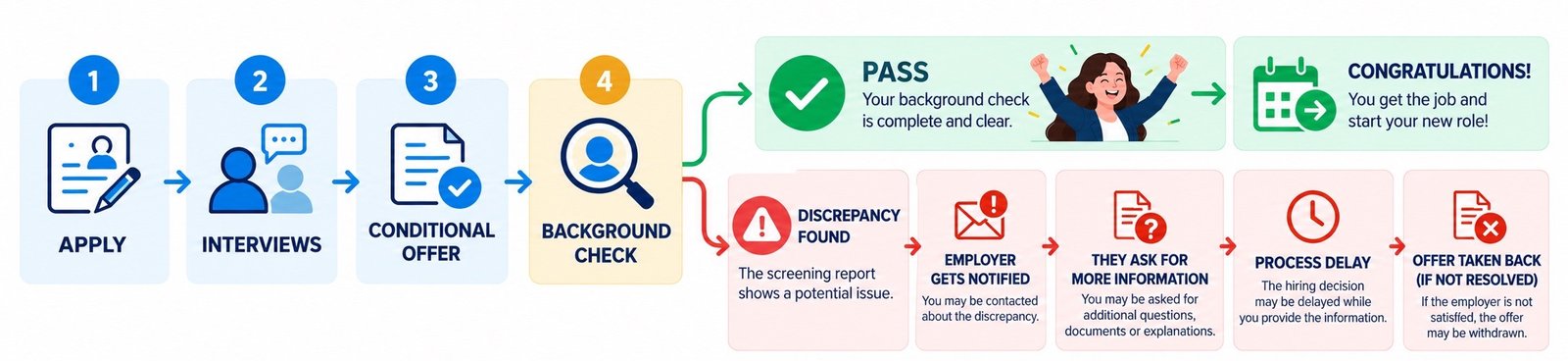
Driving employers also review your motor vehicle record, criminal history and past driving employment, including previous DOT drug and alcohol testing history. See MVR checks for employment and DUIs on a background check.
If any of those records is wrong or doesn’t match your application, the hire can take the red path in the diagram: a delay, a request for more information or a withdrawn offer. Problems often come from records you could have checked in advance, such as a ticket listed twice on your driving record, a wrong date at a past carrier or an old case without its final outcome.
You may want to see your current records at the official sources, identify any discrepancy and gather the official records that prove what is correct, before the employer’s report comes back. The Self Check Guide shows you how to do exactly that, step by step.
Who runs the DOT physical exam and what’s checked
The Federal Motor Carrier Safety Administration (FMCSA), part of the Department of Transportation, sets the DOT physical requirements. Only certified medical examiners listed on FMCSA’s National Registry can do the exam. Your primary care doctor can do it only if they’re on that registry.
The examiner reviews your medical history and checks vision, hearing, blood pressure and other medical conditions that could affect safely operating a commercial vehicle. Results are recorded on a Medical Examination Report form. If you pass, you get a medical card, which you need to drive a commercial motor vehicle (CMV) and to keep your license (CDL).
Frequently asked questions
How long does a DOT physical take?
Often 30 to 60 minutes, depending on your health history and the clinic.
How much does a DOT physical cost?
Prices vary by clinic and region, and many employers pay for it. Ask before your appointment.
Can you fail a DOT physical for high blood pressure?
Very high, uncontrolled blood pressure can prevent certification until it’s treated. Moderately high readings may lead to a shorter certificate rather than a failure.
Is a non-DOT physical the same thing?
No. A non-DOT physical is an employer’s own exam with its own standards. See what a pre-employment physical includes.
Your next step
Find a medical examiner on the national registry, bring your glasses, medication list and doctor’s records, and use this stage to check the driving and work records your employer will review.